If you’re building up your first real tool lineup, the table saw vs. miter saw decision can feel like a fork in the road. They both cut wood. They both look intimidating the first time you plug them in. And they both can absolutely level up what you’re able to build.
But they shine in different situations. One is better for breaking down sheet goods and making repeatable rip cuts. The other is the king of fast, accurate crosscuts and trim work.
Let’s walk through what each saw is best at, what it struggles with, how much space it takes, and what I’d buy first depending on the projects you actually want to build.
The quick answer
If you just want the shortest path to a confident first purchase, here’s my rule of thumb:
- Buy a miter saw first if you’re building mostly with boards: shelves, planter boxes, basic benches, picture frames, simple shop stands, fence picket projects, or anything using 1x lumber and 2x lumber.
- Buy a table saw first if you’re building anything that depends on ripping (cutting along the length): cabinets, built-ins, bookcases, plywood furniture, toe kicks, drawer parts, or anything where sheet goods are a main ingredient.
- If you’re in a tiny space and can only own one big cutting tool, a table saw often gives you more types of cuts overall, but it demands more attention to setup, accessories, and safety.
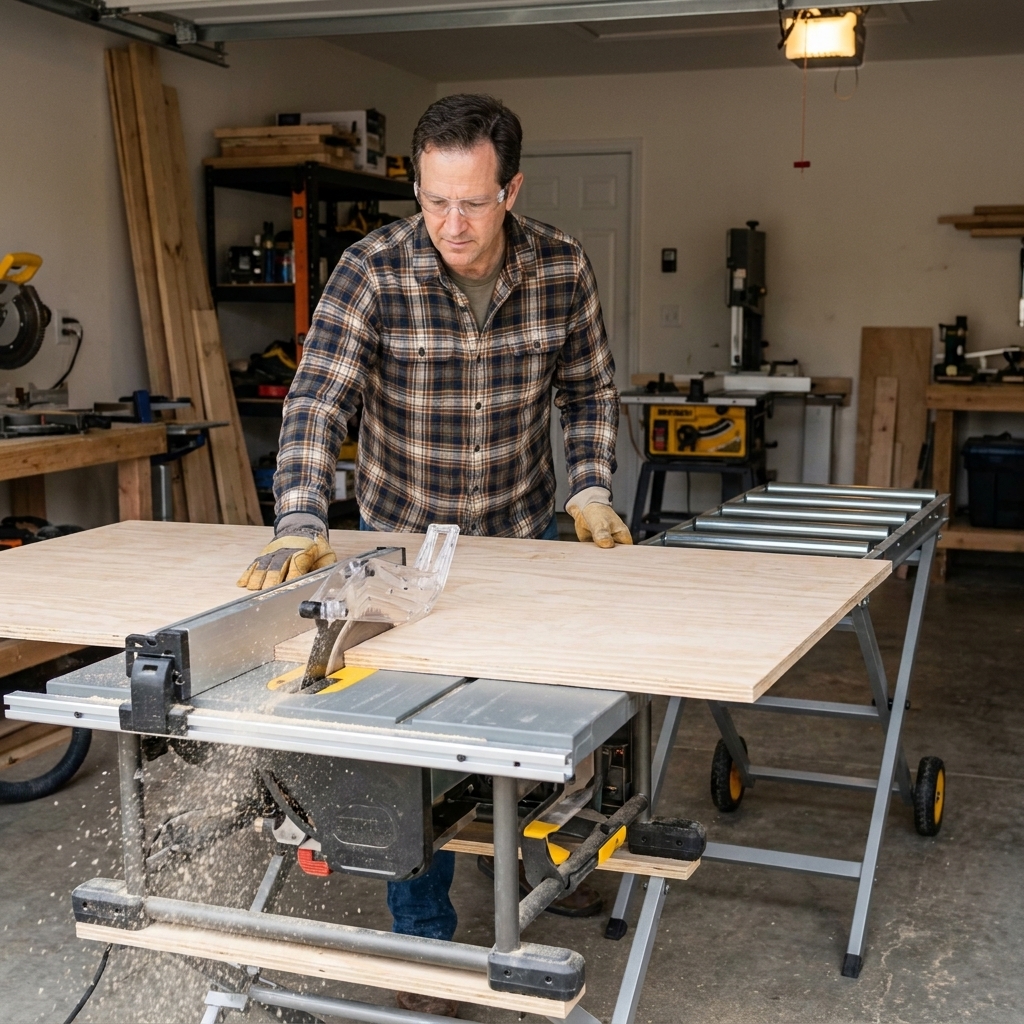
What a table saw is best at
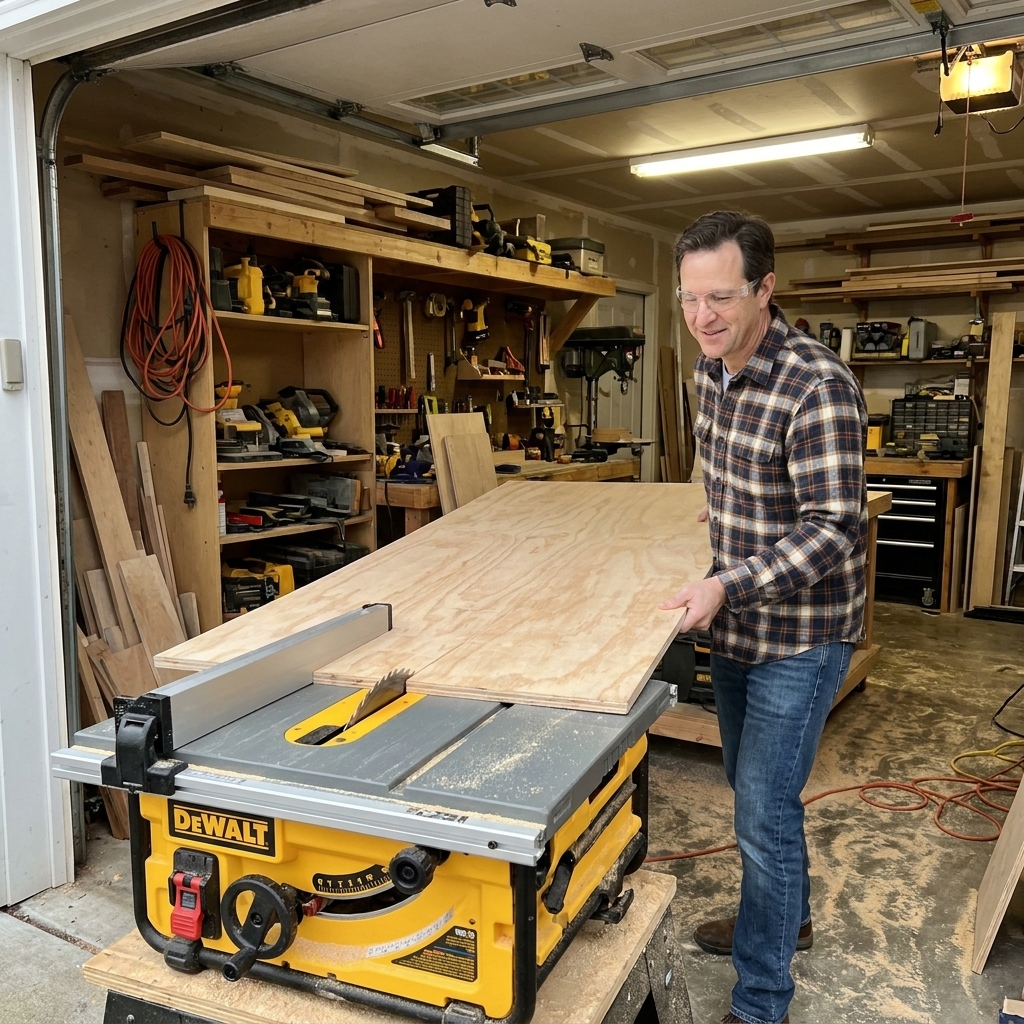
A table saw is basically a spinning blade coming up through a flat table. You push the wood through the blade while keeping it tight to the fence (the guide that helps keep your cut straight).
Table saw strengths
- Ripping boards to width accurately and repeatably
- Breaking down plywood and sheet goods (with the right support)
- Making identical parts quickly, like shelf sides or cabinet stretchers
- Joinery options later on: dados and rabbets (often with multiple passes, and sometimes with a dado stack if your saw supports it), tenon cheeks, spline slots, and more
- Cleaner, more consistent edges for glue-ups when the saw is tuned and the blade is sharp
If you’ve ever looked at a simple plywood bookcase and thought, “That seems doable,” you’re already thinking in table saw territory.
A quick capacity reality check
- Rip capacity varies a lot. Many jobsite saws are in the ballpark of 24 to 32 inches to the right of the blade, while contractor and hybrid saws often go wider with larger fences and rails.
- Full sheet plywood is possible, but it is not always pleasant on a small saw in a small shop. If breaking down 4x8 sheets is a big part of your plan, a circular saw with a guide can be the smarter first move.
What a miter saw is best at
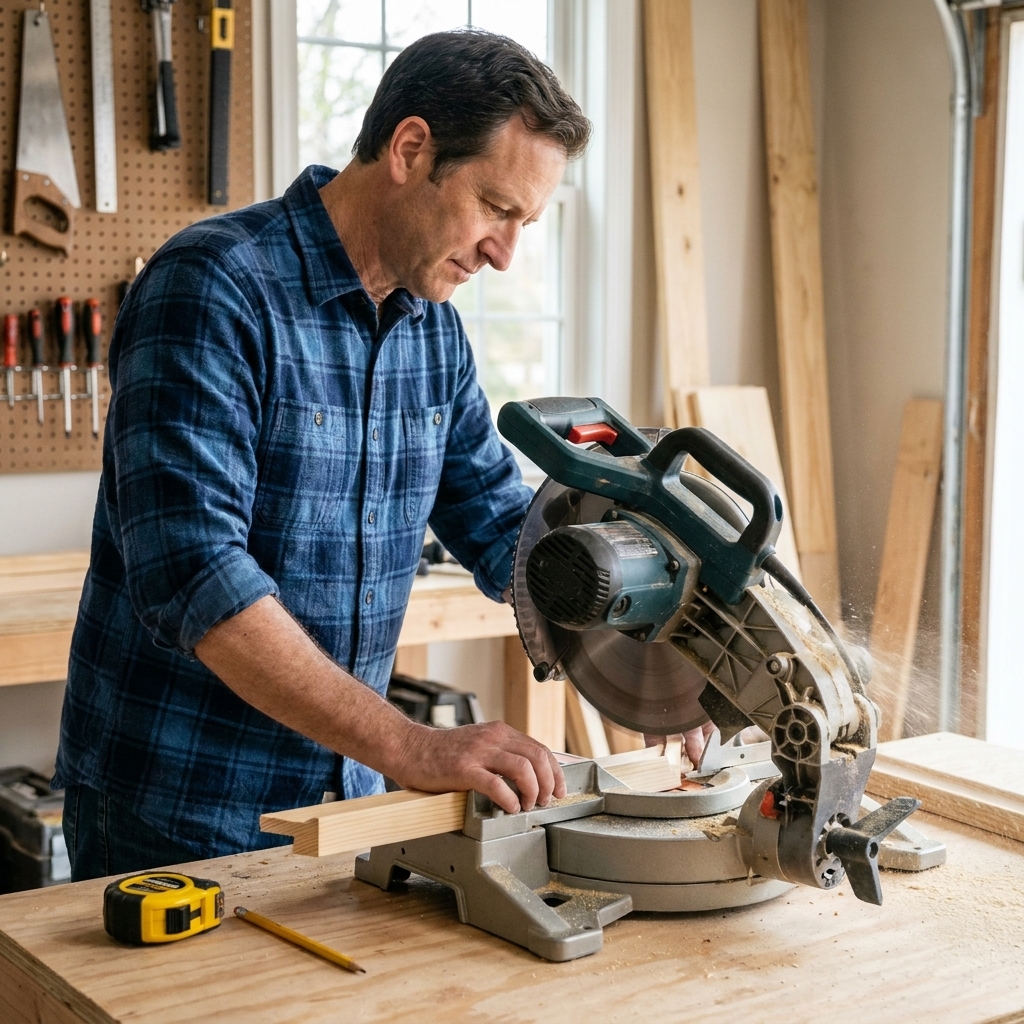
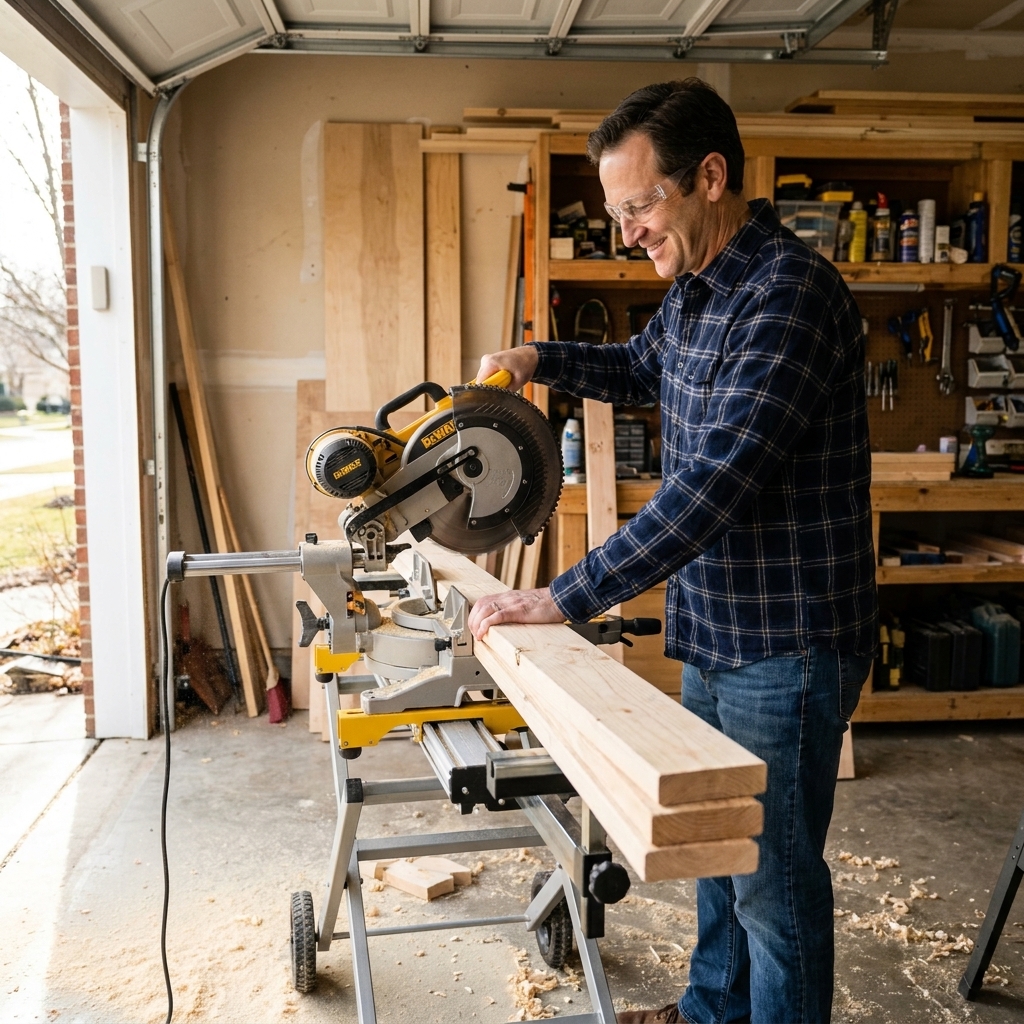
A miter saw is the chop saw style tool where the blade comes down onto the wood. Most people use it on a stand, or on a bench with support wings.
Miter saw strengths
- Fast crosscuts (cutting boards to length) with excellent repeatability
- Miter cuts (angled cuts) for picture frames, trim, and clean corners
- Bevel cuts (tilting the blade) for molding and compound angles
- Great for construction lumber like 2x4s, 2x6s, and deck boards
- Beginner-friendly workflow for batch cutting: mark, cut, repeat
If you want to start building right away with the least fuss, a miter saw can feel like cheating in the best way.
Cut width basics
- Non-sliding miter saws are limited by blade diameter and the saw’s fence design. They are great for 2x lumber and narrower boards.
- Sliding miter saws can crosscut much wider boards, but they cost more and usually take more space to operate.
Cuts each saw can and cannot do
Here’s where beginners usually get surprised. These two tools overlap a little, but not as much as you’d think.
Ripping (cutting boards to width)
- Table saw: Excellent. This is the main reason people buy one.
- Miter saw: Not what it’s for. You can’t safely rip boards on a miter saw.
Crosscutting (cutting boards to length)
- Miter saw: Excellent, fast, accurate, repeatable.
- Table saw: Very good if you use a miter gauge or, better yet, a crosscut sled. Without a sled, beginners often struggle with repeatability and support.
Angles
- Miter saw: Built for angles, especially trim and frames.
- Table saw: Can cut angles using a miter gauge, sled, or taper jig, but it is slower to set up.
Sheet goods
- Table saw: Great with proper infeed and outfeed support. A compact jobsite saw can do it, but it takes planning and space.
- Miter saw: Not practical for plywood breakdown beyond small pieces.
Space and storage
Most beginners I talk to are working in a one-car garage, a basement corner, or a shed. Sometimes it’s a balcony and a folding table, which is exactly where I started.
Miter saw space needs
The saw itself is compact, but it wants support on both sides so long boards do not tip or swing while you cut.
- Plan on a stand or a long bench setup.
- Sliding miter saws need extra clearance behind the saw unless they have a rail-forward design.
Table saw space needs
A table saw needs room in front and behind for the wood to pass through the blade.
- If you only have a few feet of infeed and outfeed, ripping long boards gets frustrating fast.
- A jobsite saw can tuck away, but you still need space when it’s in use.
Small-shop tip: If you can only dedicate one parking spot in your shop, a table saw on a mobile base often ends up being the central workstation. A miter saw is amazing, but it can become a space hog once you build long wings and stop blocks.
Budget
Prices swing a lot based on brand and features, but here’s what tends to be true in the real world:
Miter saw costs
- Basic 10-inch compound miter saw: usually a solid value and plenty for beginner furniture and shop projects.
- Sliding miter saw: costs more, takes more space, and is helpful if you routinely cut wider boards.
Table saw costs
- Jobsite table saw: common beginner choice. Portable, decent power, but fences vary wildly in quality.
- Contractor or hybrid saw: more stable and accurate, larger footprint, typically better long-term if you have the space and budget.
If your budget is tight, I’d rather see you buy a good used miter saw than a table saw with a frustrating fence. On table saws, the fence matters more than beginners realize because it is the difference between straight and repeatable and why are all my parts different widths.
Dust and noise
Dust is one of those beginner surprises that hits fast, especially in a garage or basement.
- Miter saws are messy. Even with a shop vac connected, a lot of sawdust escapes because the blade throws dust forward and sideways. A good hood or dust box behind the saw helps more than most people expect.
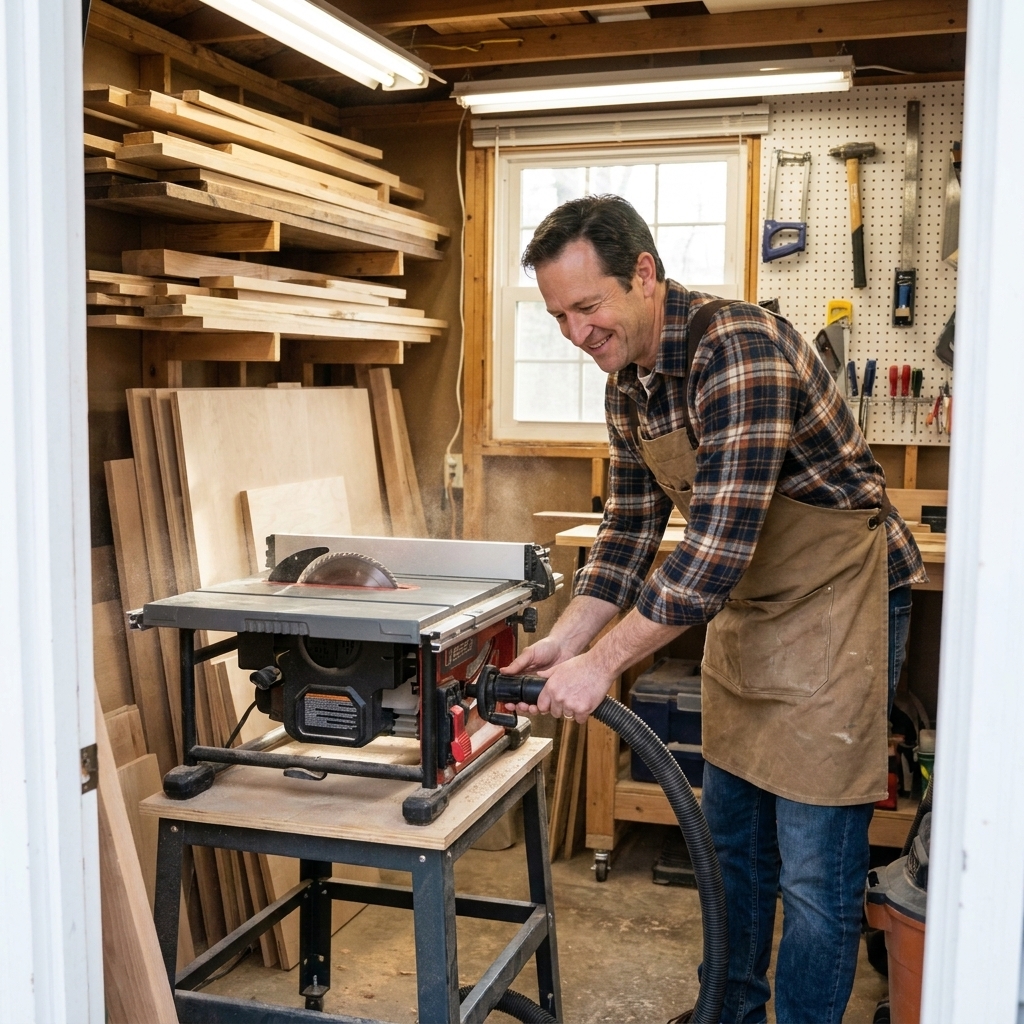
- Table saws usually collect better. Many saws have a 2.5-inch dust port that hooks to a shop vac, and enclosed contractor or hybrid saws can be even better. You still need airflow and good habits, but it is generally easier to manage.
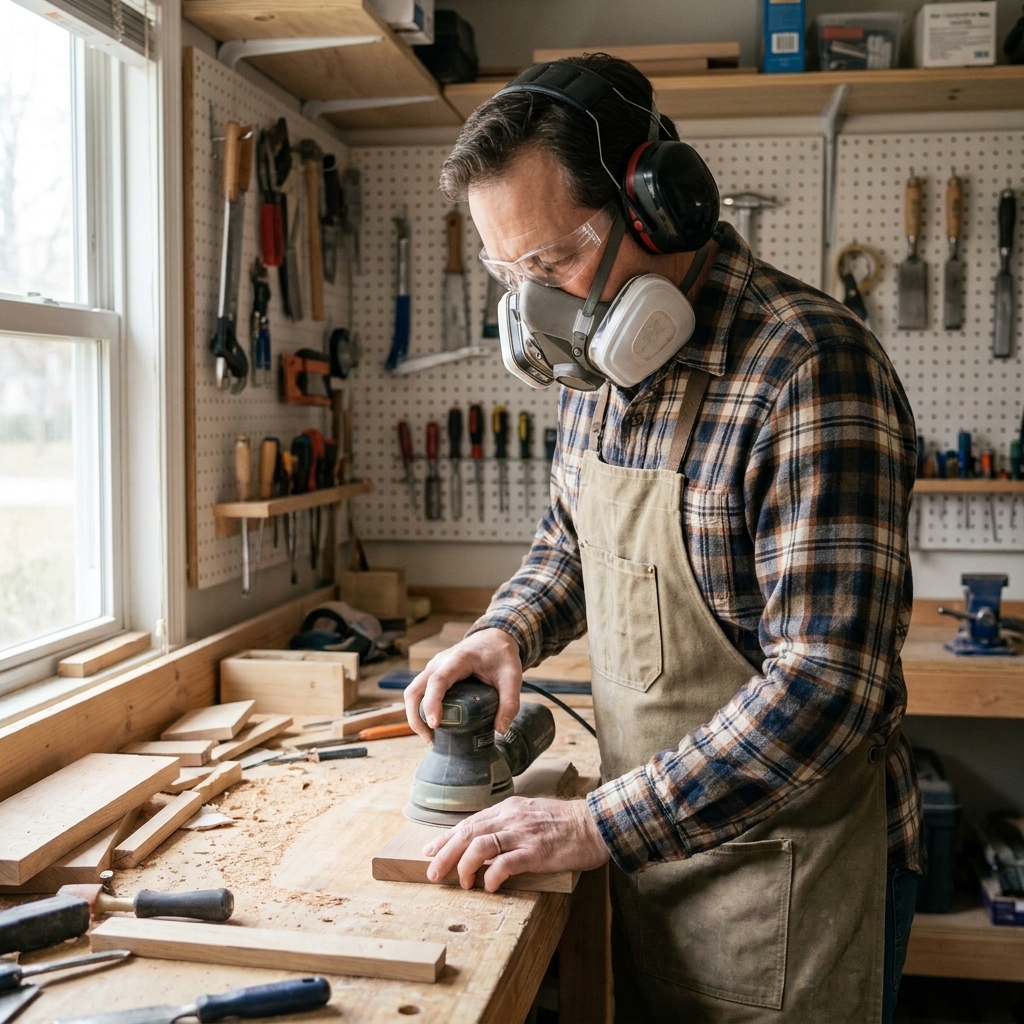
Noise matters too. Both are loud, but miter saws in particular can feel sharp and echo-y in small rooms. Hearing protection is not optional.
Safety
Both tools can hurt you. One tends to be more forgiving in day-to-day beginner use.
Table saw safety basics
Table saw injuries often come from kickback, when the blade grabs the wood and throws it back toward you. The good news is that modern safety features help a lot.
- Use the riving knife (it helps prevent the cut from pinching the blade)
- Use the blade guard when you can
- Use push sticks for narrow rips
- Stand slightly to the side, not directly behind the blade
- Support long stock so it does not lift or twist mid-cut
- Do not use the rip fence as a crosscut stop unless you are using a proper stop block setup that prevents binding between the fence and blade
Miter saw safety basics
Miter saw injuries often happen when hands drift too close, or when small offcuts get pulled into the blade.
- Keep hands well away from the cut line, even on short pieces
- Let the blade stop before lifting it back up
- Clamp small pieces instead of trying to hold them
- Support long boards so they sit flat and do not roll
My honest take: For most beginners, a miter saw feels safer and is simpler to operate correctly. A table saw is not too dangerous to own, but it demands more discipline and better habits from day one.
Accuracy
Beginners often assume one saw is automatically more accurate than the other. In practice, accuracy comes from setup.
Miter saw accuracy depends on
- Whether the fence is square to the blade
- How much the saw deflects when you bring it down
- Your blade quality (a dull blade makes cuts wander)
- Using a stop block for repeat cuts instead of measuring every piece
Table saw accuracy depends on
- Fence quality and alignment
- Blade alignment to the miter slots
- Stable support for large panels
- A decent blade and consistent feed rate
If you’re building furniture, you’ll eventually care about both. Early on, the easiest path to things actually fit is usually miter saw plus a stop block for identical lengths, or table saw plus a reliable fence for identical widths.
Blades that make life easier
You can do a lot with stock blades, but a better blade is one of the cheapest upgrades that actually shows up in your results.
- Miter saw: A fine-tooth crosscut or finish blade helps reduce tearout, especially on trim and hardwoods.
- Table saw: A good combination blade is a strong all-around starting point. If you do a lot of ripping, a dedicated rip blade can feel like a power upgrade.
Match the saw to your projects
Buy a miter saw first if you want to build
- Outdoor planters and raised beds
- Basic workbench frames and shop stands
- Simple shelving with construction lumber
- Picture frames and small decor (especially with a fine-tooth blade)
- Trim, baseboards, and home improvement projects
Buy a table saw first if you want to build
- Plywood bookcases and cabinet boxes
- Built-ins and closet organizers
- Drawers and consistent-width parts
- Panels, glue-ups, and furniture components that need straight edges
- Anything where you keep thinking, I wish this board was narrower
Beginner alternatives
If neither purchase feels right, you can still build a lot with a simpler setup.
Circular saw with a guide
A circular saw plus a straightedge guide (or a track saw style guide) is a budget-friendly way to break down plywood and make long cuts without wrestling full sheets on a table saw. In a small shop, it is often the safest and least frustrating way to handle sheet goods.
Jigsaw for curves and rough cuts
Not a replacement for either saw, but useful when you need shape cuts or you are working in an apartment and noise is a concern.
Hand saw and a miter box
Slow, yes. But it is surprisingly effective for small projects, and it teaches you how to mark and cut accurately without relying on machines.
If you can only buy one
Here’s the exact list I’d run through if I was back on my old apartment balcony, trying to make one smart purchase.
- I build mostly with plywood: table saw, or a circular saw with a guide if space is tight or you will be breaking down full sheets regularly
- I build mostly with 2x lumber: miter saw
- I want to make cabinets someday: table saw first
- I want to do trim and home projects: miter saw first
- I have almost no space for long support wings: a table saw on a folding stand can be easier to store
- I get nervous around kickback and want the simplest learning curve: miter saw
A smart two-saw path
If you stick with woodworking, you will eventually see why so many shops have both.
- Phase 1: Miter saw for fast length cuts, plus a drill and a pocket-hole jig for quick wins.
- Phase 2: Add a table saw when you start craving cleaner rips, more repeatability, and plywood builds.
That said, if your dream projects are built-ins and cabinets, it is totally reasonable to flip that order.
FAQ
Can a miter saw replace a table saw?
Not really. A miter saw cannot safely rip boards to width, and ripping is the job that unlocks cabinets, built-ins, and lots of furniture parts.
Can a table saw replace a miter saw?
Sometimes. With a crosscut sled and a good stop system, a table saw can handle many crosscuts and even angles. It will just be slower and less convenient for long boards and trim work.
Do I need a sliding miter saw?
Only if you routinely cut wide boards. A non-sliding 10-inch compound miter saw is plenty for a lot of beginner projects. Sliders are nice, but they cost more and take up more room.
What about a small benchtop table saw?
Benchtop saws can work, but fence quality and stability can be hit or miss. If you go this route, prioritize a solid fence that locks down square and does not drift while you push stock through. Also note that some saws and some regions do not support dado stacks, so plan on making dado cuts with multiple passes if needed.
What’s the safest first saw for beginners?
For most people, a miter saw has a gentler learning curve. A table saw is absolutely learnable, but you need to commit to using the riving knife, push sticks, and proper support from day one.
My bottom line
If you want the most immediate payoff for typical beginner builds using dimensional lumber, start with a miter saw. You’ll be cutting parts to length confidently in a single afternoon.
If your goals lean toward plywood furniture, cabinets, built-ins, and clean repeatable rips, start with a table saw and take the time to learn safe technique, basic setup, and dust control.
Either choice can be the right first step. The best saw is the one that matches the projects you’ll actually build next weekend, not the projects you might build someday.