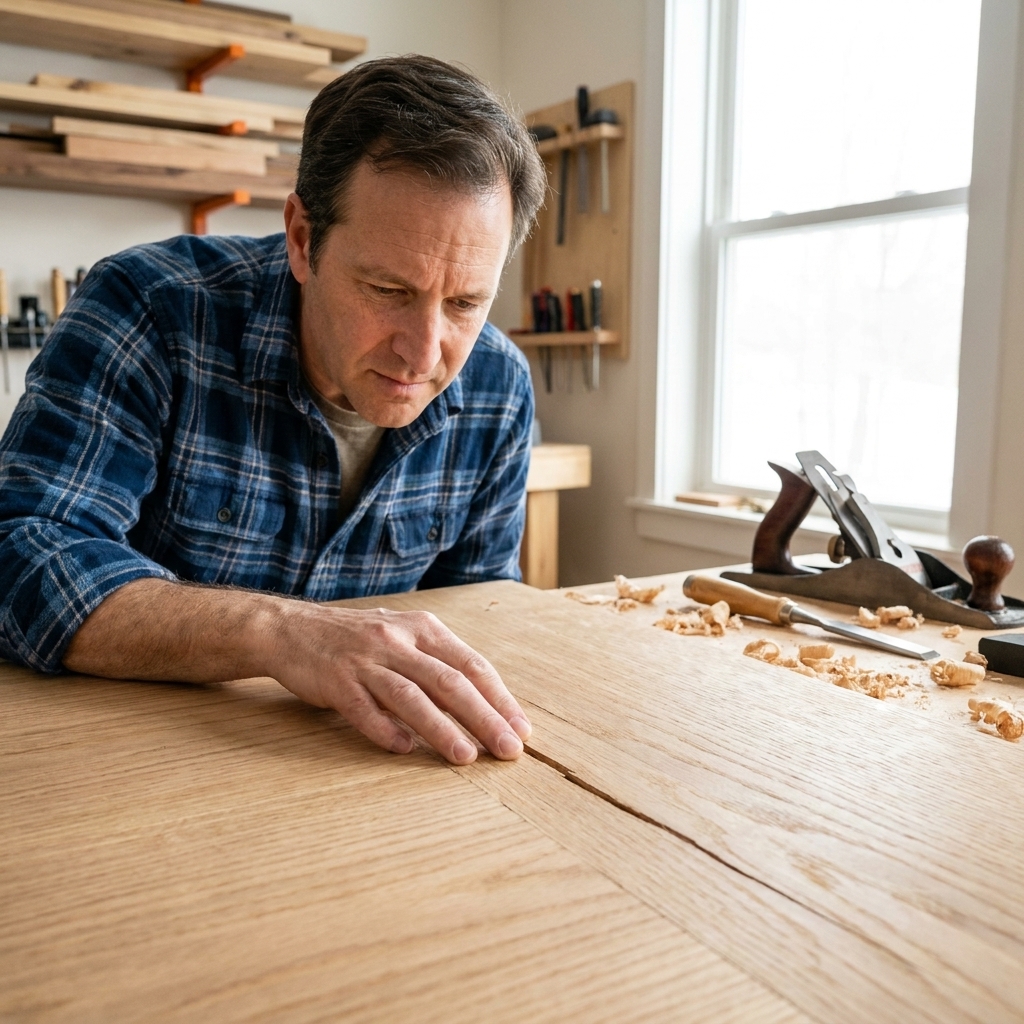
The first time wood movement bit me, it was a “simple” little tabletop in my apartment. Looked perfect on day one. A few weeks later, the mitered frame around it started opening up like it was trying to escape. Nothing was wrong with my cuts. The wood did what wood always does.
Wood is not plastic. It’s a bundle of tiny straws that drinks in moisture and lets it go. When the air gets more humid, wood swells. When the air dries out, it shrinks. If your joinery doesn’t allow that to happen, something gives. Usually a joint. Sometimes the board itself.
What wood movement actually is
Wood movement is mostly about humidity, not temperature. Your shop can be warm or cold, but if the air is dry, wood will shrink. If the air is humid, wood will swell.
Here’s the key beginner rule:
- Wood moves a lot across the grain.
- Wood moves very little along the grain.
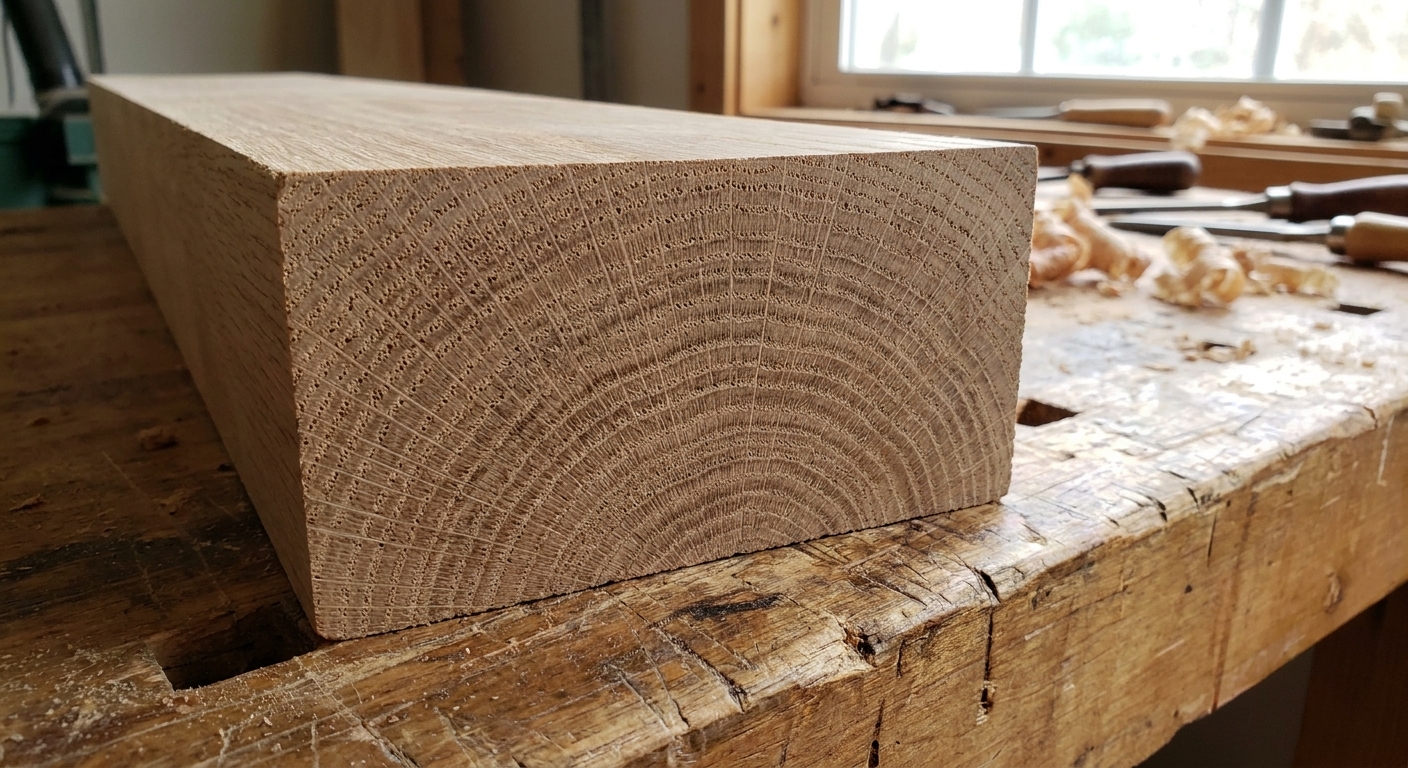
Across the grain means the board’s width and thickness. Along the grain means the length.
So if you build a wide panel (like a tabletop or cabinet side), the width is what wants to change with the seasons. If you trap that width change, your project can crack, cup, split, or pop joints loose.
Across the grain vs along the grain
Think about a typical board from the home center:
- Length: 4 ft, 6 ft, 8 ft. This barely changes.
- Width: 3 1/2 in, 5 1/2 in, 7 1/4 in. This can change enough to break things.
- Thickness: 3/4 in, 1 1/2 in. This moves too, but it usually causes less drama than width.
If you remember only one sentence from this whole article, make it this one: Never glue wood across the grain in a way that prevents it from expanding and contracting.
Why wood movement breaks beginner projects
Most beginner projects fail for one of these reasons:
- A cross-grain glue-up that locks a wide board in place.
- A frame around a panel where the panel is glued or screwed tight on all sides.
- Fasteners driven through a solid top with no room for the top to slide.
- Finish applied unevenly, which can lead to cupping because one side takes on moisture faster.
Wood movement itself is not the enemy. The enemy is pretending the wood is going to stay the same size forever.
How much does wood move?
You don’t need to calculate this perfectly for beginner builds, but it helps to have a feel for the scale.
A solid wood panel that’s 18 to 24 inches wide can easily change by 1/8 inch or more from a dry winter to a humid summer, depending on your area, the species, and how dry your home gets.
That does not sound like much until you realize glue joints and screws do not like being asked to stretch and compress over and over.
If you want a simple “shop rule”:
- Anything under about 3 inches wide rarely causes trouble in basic furniture parts.
- Anything that forms a wide panel (tabletops, cabinet sides, door panels) needs a movement plan.
Beginner-friendly joinery that plays nice with wood movement
Pocket holes: strong, but watch grain direction
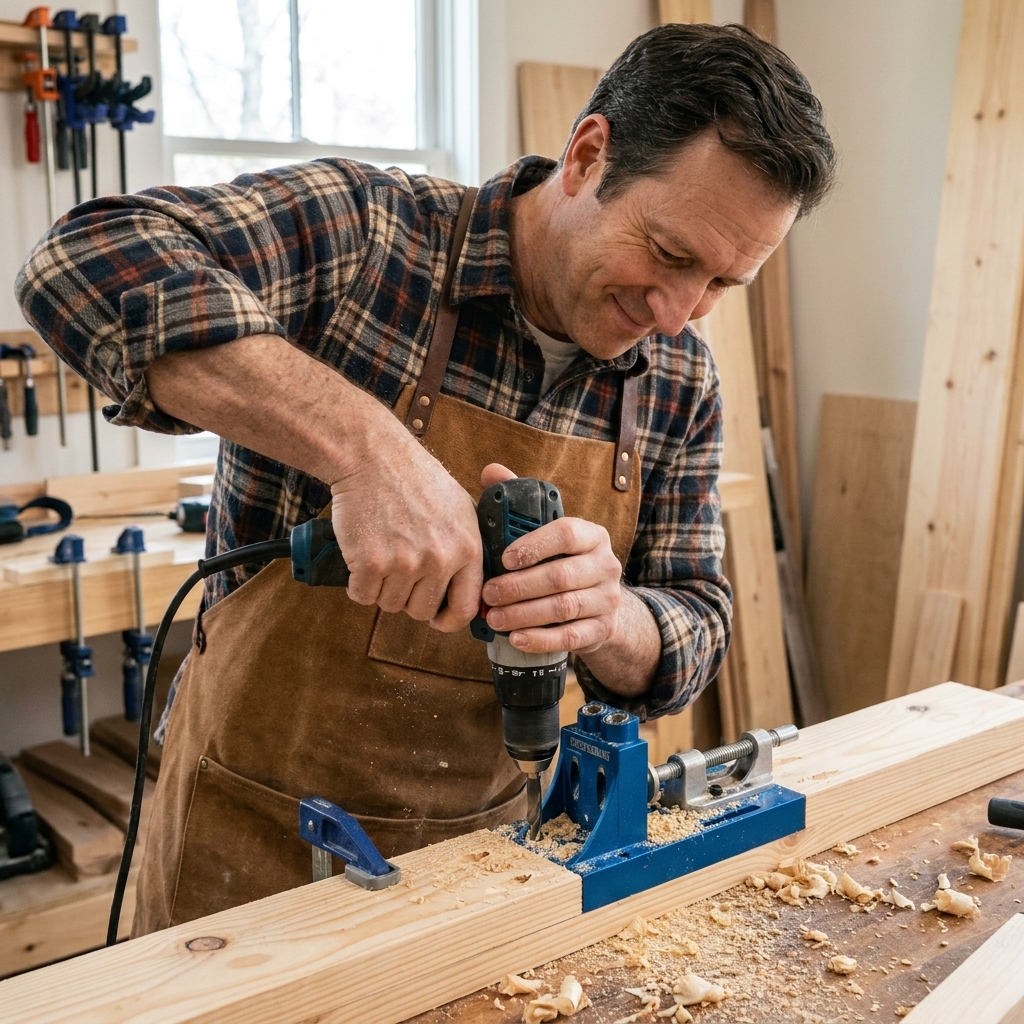
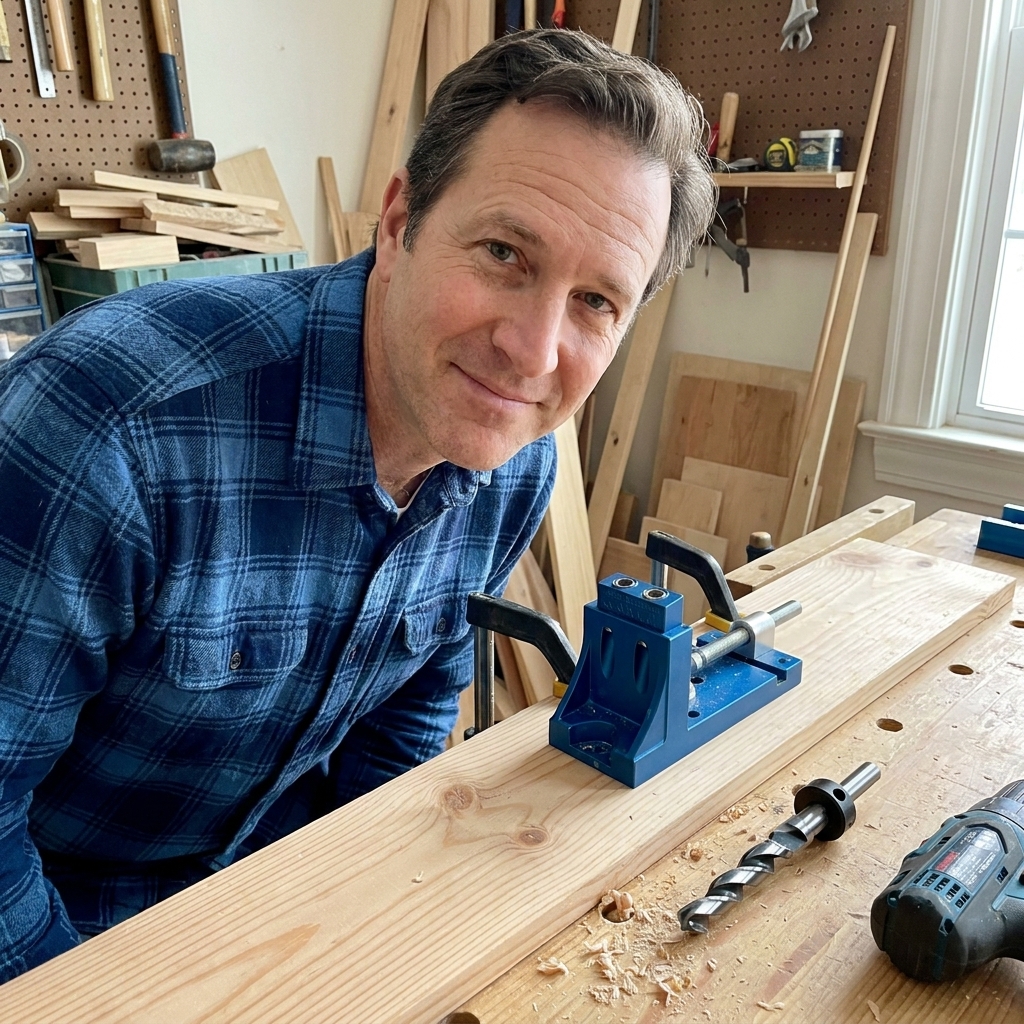
Pocket holes are great for beginners because they are fast and forgiving. They work best when you’re joining parts where movement is similar. For example, an apron to a table leg is usually fine.
Where beginners get in trouble is using pocket holes to attach a solid tabletop by driving screws tight through fixed holes. The top wants to move. The base does not.
Fix: use elongated holes (or a tabletop fastener method) so the top can slide a little.
Glue only long-grain to long-grain
Wood glue is strongest when long grain meets long grain. End grain is thirsty and doesn’t bond nearly as well. But movement-wise, the bigger issue is gluing a cross-grain joint that locks a wide board.
Safe beginner glue joints:
- Edge-gluing boards to make a wider panel (the whole panel moves together).
- Long-grain lap joints where grain direction matches.
- Face frames glued to plywood (plywood barely moves).
Risky beginner glue joints:
- Gluing a solid wood breadboard end fully across the width.
- Gluing a solid wood panel into a dado in a way that traps it on both sides.
- Gluing a miter frame around a solid wood center panel.
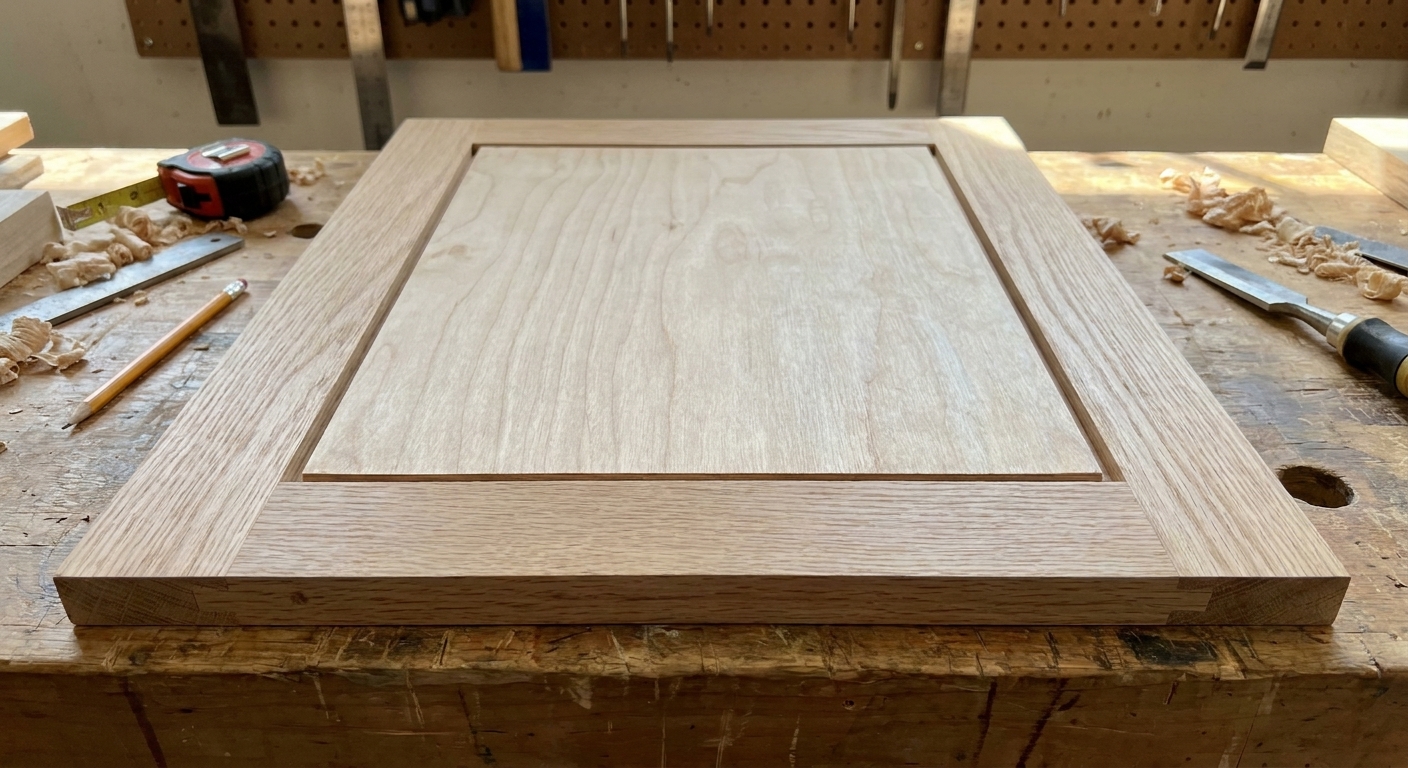
Floating panels: the “frame and panel” trick
If you want the look of a framed panel door, the classic solution is simple: the panel floats in a groove. It is not glued in. The frame holds it, but the panel is free to expand and contract.
This is one of those woodworking ideas that sounds fancy until you do it once. After that, it feels obvious.
How to attach a solid wood top without cracks
This is the big one. Tabletop cracks and base joints failing are often an attachment problem.
The goal
Hold the top down firmly, but allow it to move across the grain.
Beginner methods that work
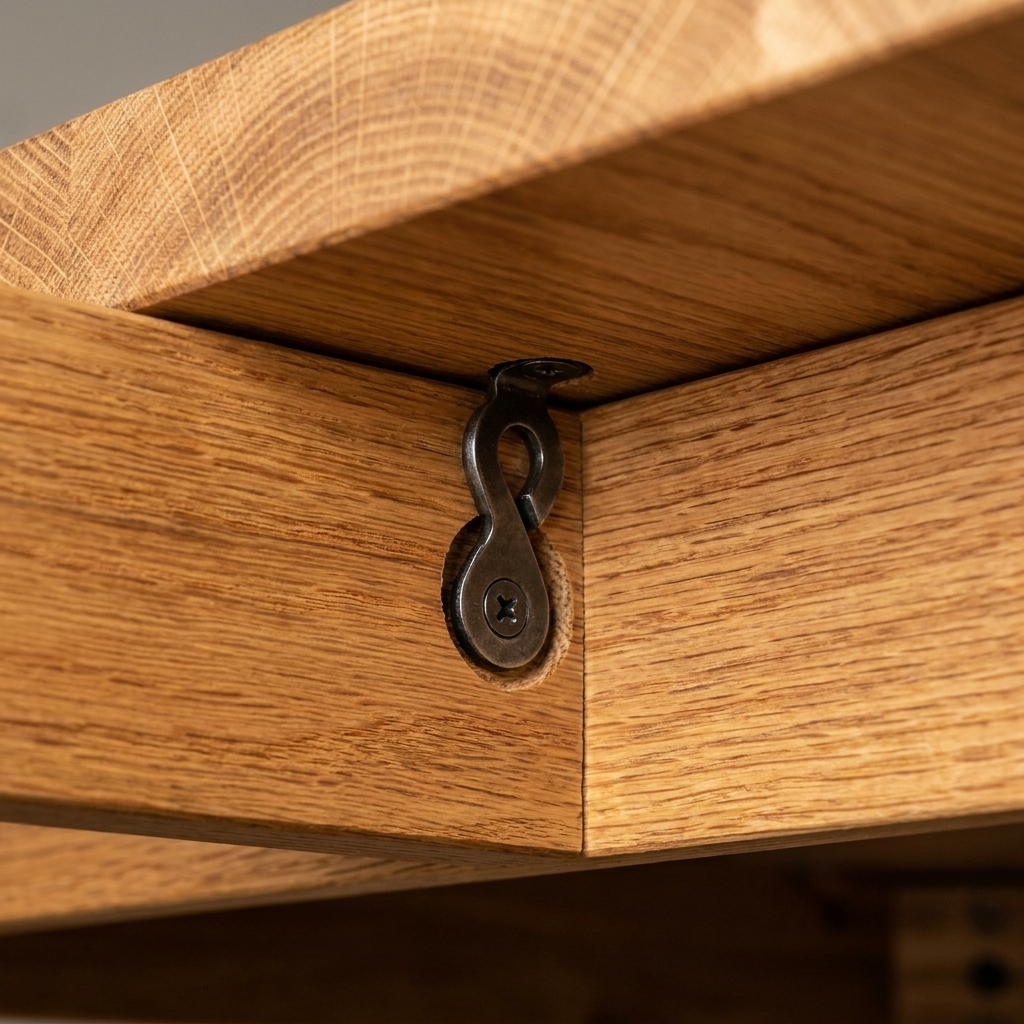
- Figure-8 fasteners: small metal fasteners that pivot as the top moves.
- Z-clips or tabletop clips: fit into a kerf or groove in the apron and let the top slide.
- Screws in elongated holes: drill or route a slot in the apron so the screw can shift.
If you’re using screws, here’s the simple setup:
- Use a normal round hole near the center of the top’s width (acts like a fixed reference point).
- Use elongated holes as you move toward the left and right edges.
- Snug the screws down, but do not crank them like you’re mounting a truck hitch.
Plywood, MDF, and why beginners love them
Solid wood is amazing, but sheet goods can save your sanity.
- Plywood is made of layers with alternating grain direction. It stays very stable.
- MDF is extremely stable too, but it hates water and does not hold screws as well on edges.
That’s why so many beginner-friendly builds use plywood boxes with solid wood trim. You get the look of real wood where you see and touch it, and the stability of plywood where movement would cause headaches.
Common wood movement mistakes (and easy fixes)
Mistake: Screwing through an apron into a tabletop with tight holes
Fix: Use clips or elongated holes so the top can shift.
Mistake: Gluing a solid shelf into dados on both sides of a cabinet
If it’s plywood, glue away. If it’s solid wood, you’re trapping movement.
Fix: Use plywood for the shelf, or mechanically fasten the shelf with room to move, or redesign with a frame-and-panel approach.
Mistake: Building a “picture frame” around a solid wood panel and gluing the whole perimeter
Fix: Float the panel, or make the center from plywood, or only glue in a few strategic spots where movement won’t be locked in.
Mistake: Finishing only one side
Finish slows moisture exchange. It does not stop movement, but an unfinished underside can take on moisture faster than the finished top and encourage cupping.
Fix: Apply finish to all sides, including the underside and inside faces when possible.
Quick shop tests to spot movement risks
The “wide board” test
If a part is wider than your hand, pause and ask: How will this move? Tabletop? Door panel? Cabinet side? That’s where you plan for seasonal change.
The “grain direction” test
Look at the grain direction on both pieces you’re joining.
- Grain running the same direction usually plays nice.
- Grain crossing directions is where you need floating joints, slots, or sheet goods.
The “can it slide?” test
If you’re attaching a wide solid wood piece to something stable, ask: Is there any place in this design where the wood can slide a little? If the answer is “no,” you’re relying on luck.
FAQ
Does sealing wood stop wood movement?
No. Finish slows down how quickly wood gains or loses moisture. It does not freeze it in place. A finished tabletop will still expand and contract through the year.
Is wood movement worse in some climates?
Yes. Big humidity swings make movement more noticeable. Homes with strong winter heating and no humidifier often get very dry, which can shrink panels hard.
Do I need to acclimate wood before building?
It helps, especially for solid wood panels. Let the boards sit in your shop space for a few days (longer if they came from a very different environment), then mill them and let them rest again if you can. You’re trying to avoid building with wood that is still rapidly changing moisture content.
What’s the easiest beginner way to avoid movement problems?
Use plywood for large flat areas, and use solid wood for legs, trim, and small parts. When you do use a solid wood panel, attach it with clips or slots, and avoid trapping it in glue.
The simple mindset shift
When you build with wood, you’re not building with a dead material. You’re building with something that’s always trying to match the room it lives in.
If you give it room to move, your joints stay tight and your panels stay flat. If you trap it, the wood will eventually pick a weak spot and make its own room.
Take it one cut at a time, and add one more habit to your build process: before you glue or screw anything wide, ask, where is the movement going to go?